


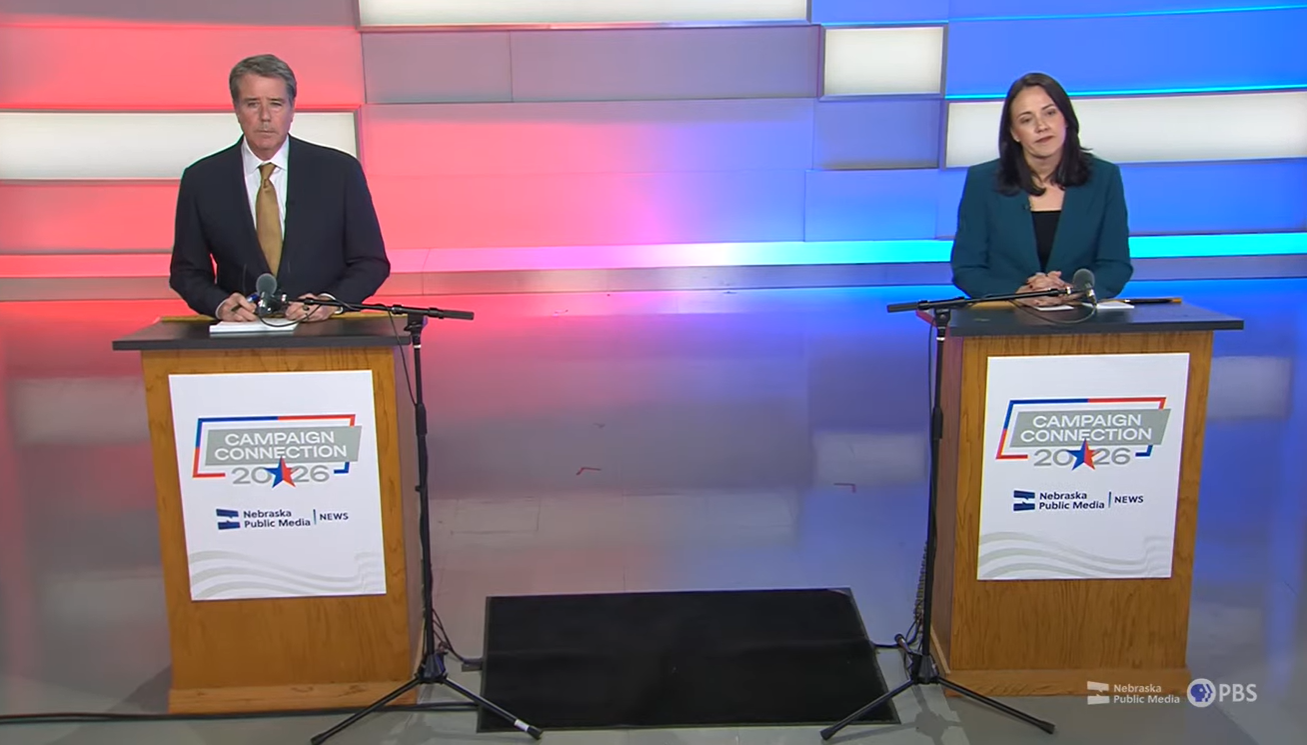
Health insurance costs, Social Security, and immigration produced clear policy differences Wednesday as Republican Brinker Harding and Democrat Denise Powell debated in a Nebraska congressional race with implications for control of the U.S. House.
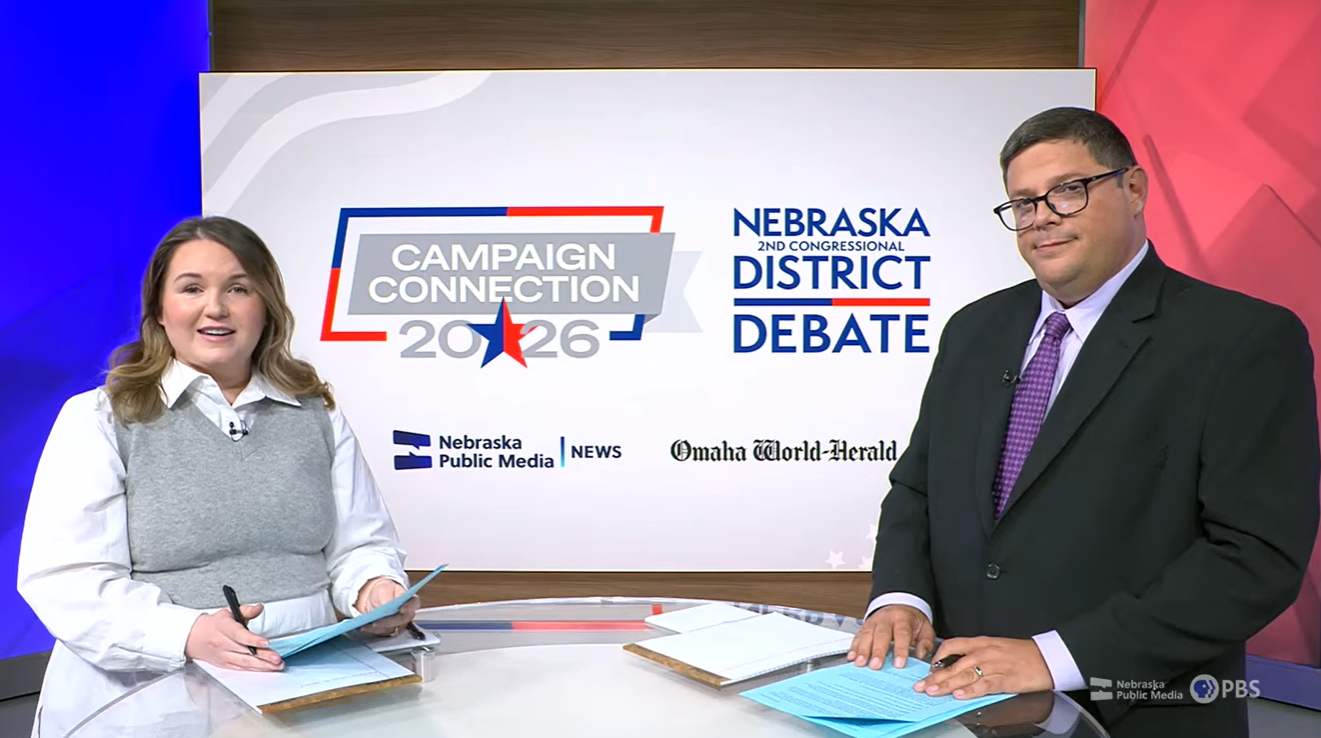
Courtesy Nebraska Public Media; moderators were Jackie Ourada, managing editor of Nebraska Public Media News, and Aaron Sanderford, managing editor of the Omaha World-Herald.
The candidates met at Nebraska Public Media’s Ron Hull Studio in Lincoln for a debate presented by Nebraska Public Media and the Omaha World-Herald and broadcast statewide. Debate moderators were Aaron Sanderford, managing editor of the Omaha World-Herald, and Jackie Ourada, managing editor of Nebraska Public Media News.
They are competing to replace retiring Republican Rep. Don Bacon in the Omaha-area Second Congressional District. Libertarian Eric Michael Foreman is also running but did not participate in Wednesday’s debate.
Although Lincoln is outside the district, the race could help determine which party controls the House—and the direction of federal policy affecting Nebraskans statewide.
The district has a history of splitting its ticket. Flatwater Free Press reported that it was one of only three congressional districts nationally that supported Democrat Kamala Harris for president in 2024 while electing a Republican to Congress.
Different approaches to health insurance
Powell called for reversing Medicaid cuts enacted through the One Big Beautiful Bill Act, restoring enhanced Affordable Care Act subsidies and creating a public insurance option.
“I also believe in a public option,” Powell said. “I think there’s a lot of people who fall into a gap, who need access to an affordable plan that they can voluntarily buy into.”
Harding argued that subsidies routed through insurers do too little to encourage lower costs. He proposed directing assistance to individuals through health savings accounts.
“What we should have done with those subsidies is give it to the user, give it to the taxpayer, put it in an HSA account,” Harding said.
He also defended work or volunteer requirements for Medicaid recipients, while Powell argued the coverage changes were damaging patients and the broader health care system.
Social Security: Higher taxable earnings or a bipartisan agreement
Powell supported increasing the earnings subject to Social Security taxes for people making more than $400,000 annually.
“This is not the only solution, but it would help make Social Security solvent for the long run,” she said.
Harding called for lawmakers to begin bipartisan negotiations immediately rather than waiting until the program’s financial problems become more urgent. He opposed changes for current beneficiaries.
“And there should be no changes to those who are currently receiving the benefits of Social Security,” Harding said.
The financial outlook does not mean Social Security payments would disappear. The program’s trustees project the retirement and survivors trust fund will exhaust its reserves in late 2032. Without congressional action, continuing revenue would cover an estimated 78% of scheduled benefits.
Iran war and Nebraska energy
Both candidates called for a quick end to the Iran war and opposed Iran obtaining nuclear weapons, but differed over the administration’s approach.
Harding emphasized national security and greater American energy independence. He also pointed to Nebraska corn and soybean producers and the potential for biofuels to help meet energy needs.
Powell said she opposed the war from the beginning and criticized the administration for lacking a clear plan or exit strategy. She tied the conflict to financial pressure on Nebraska families, farmers and trucking businesses.
Citizenship and immigration enforcement
Both candidates supported secure borders and removing violent criminals, but differed over the future of immigrants already living and working in the country.
Powell advocated pathways to residency or citizenship for people who have been working, contributing to their communities and paying taxes. She connected immigration reform to workforce needs in agriculture, hospitality and health care.
Harding supported examining ways to speed up the legal immigration process and allowing legal employment status, but rejected a pathway to citizenship or amnesty.
Both supported body cameras for ICE agents. Powell also called for independent investigations into alleged misconduct and restrictions on warrantless searches. Harding stressed the importance of proper equipment and training for federal agents.
Schools, agriculture and spending
Asked about federal tax breaks for private K-12 tuition, Harding answered yes, and Powell answered no.
Powell said parents should decide where their children attend school, but argued that federal policy should protect public school resources. Harding did not expand on his answer before the exchange moved to other subjects.
The candidates also identified different priorities when asked about working across party lines.
Powell called for the passage of a comprehensive farm bill, citing financial pressure from agricultural inputs and health insurance costs. Harding emphasized reducing federal debt and supported a balanced-budget amendment.
There was some agreement elsewhere: Both expressed support for medical marijuana and for education and career opportunities beyond traditional four-year degrees.
The general election is November 3. Early voting is underway.