



In early June, NASA astronauts Barry “Butch” Wilmore and Sunita “Suni” Williams set out on the first crewed mission of the Boeing Starliner capsule, launching from the Cape Canaveral Space Force Station in Florida aboard the capsule to the International Space Station (ISS).
This mission was meant to last eight days… but as the Starliner began to dock with the ISS, several thrusters malfunctioned and helium began to leak in the ship’s propulsion system.
After two months of investigation, officials with NASA announced that Wilmore and Williams will be spending nearly nine months in orbit before returning in February 2025 — hitching a ride back to Earth on a SpaceX Crew Dragon capsule after completing a six-month tour of duty.
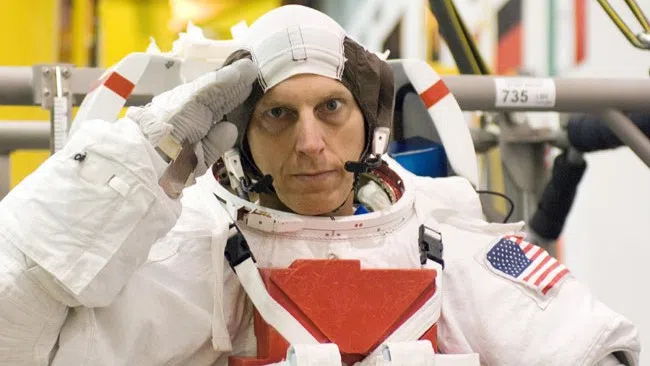
The reaction from the public has been mixed, with concerns about the crew of two being “stuck” or “stranded” in space. However, Williams’ former colleague, retired U.S. astronaut and Nebraska native Clayton Anderson, urges us not to worry.
Stymied, Not “Stuck”
“The Starliner is not stuck in space,” Anderson clarified to KLIN News. “It could come home with them or without them. NASA has chosen to bring it home without them, with a nod to being overly cautious and safe.”
Successful tests were performed on the Starliner’s maneuvering thrusters, according to NASA, and the helium leaks have not worsened and have been deemed stable. Ultimately, NASA concluded there is no way to prove the systems will continue to operate normally, ensuring a safe de-orbit, re-entry and landing. NASA officials said Saturday the decision to collaborate with SpaceX was unanimous.
Anderson made his first journey into space on the STS-117, replacing Williams in 2007 as a member of the ISS Expedition 15 crew. Now retired, Anderson is an adjunct professor at Iowa State University, and President/CEO of the Strategic Air Command and Aerospace Museum in his hometown of Ashland, Nebraska.
Monday, August 26, marks 82 days in orbit for Wilmore and Williams. Anderson shed light on what the next six months will be like for them.
“We can imagine they’re working and helping the current ISS crew. They’re enjoying zero gravity, space food, looking out the window, and all those fun things. I think the hardest part for them, from my perspective, would be the mental aspect of expecting to be up there much longer than they anticipated. They have to adjust, their families have to adjust,” he said. “But we’re astronauts. We’re trained. We’re into mission success, and we’re going to do whatever it takes to succeed.”
Anderson says, if he were floating in the ISS, “I would find myself worried about getting bored.”
“When I was up there for five months, there were times when I got a little bored and I was looking for unique things or different things to do. I hope they don’t have that issue. Maybe they will, maybe they won’t. But there’s a lot of people up there on the ISS, so there are a lot of hands and company.”
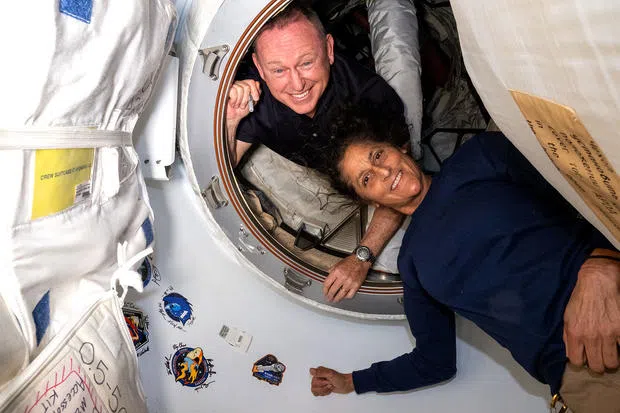
Butch Wilmore (top) and Sunita Williams aboard the International Space Station on July 2, 2024. (Image credit: NASA.)
“My Space Sister”
Of his old friend Suni, Anderson says “I’m guessing that she’s happy as a clam up there and loving life.”
“She’s my space sister. She’s a pretty amazing young lady. She’s a helicopter pilot from the Navy and a test pilot… I’m not sure having to stay there through February will bother her at all. I would love to be up there with her. Flying in space with her was a treat, and training with her was a treat. I was her backup in the early days, and so we did a lot of things together, and we had a great time together. She’s going to love life up there. She’s in her element,” he said.
Creeping boredom isn’t the only feature of space travel astronauts grapple with. Anderson said space crews are subject to additional exposure to radiation during travel. Without the weight of gravity, astronauts experience a decrease in muscle mass and bone density. Fluids in the body also shift upward to the head from the lack of gravity, which can put pressure on the eyes and cause vision problems.
“Muscular/skeletal degeneration is recoverable through physical therapy, and NASA is constantly studying on the effects of zero gravity on eyesight,” Anderson explained. “There are lots of things that we don’t know about living and working in space, but there are now a lot of things we do know because of people like Butch and Suni and other astronauts who have spent over a year in space at a time. Gathering data is so important.”
Dangerous and Difficult
A history of tragedies involving space exploration has created a public anxiety about the safety of crews. But when it comes to the death-defying feat of space travel, Anderson says malfunctions like the one aboard the Boeing Starliner capsule are not particularly rare.
“Spaceflight is hard. It’s dangerous. It’s difficult, and it costs a lot of dollars. So for NASA to be overly cautious and err on the side of safety is typical, especially given that we didn’t do that for the Apollo 1, for Challenger, or Columbia. It’s an okay thing to be a little over sensitive for that,” he said. “I would have felt comfortable flying home on the Starliner as planned, both as an astronaut and a test pilot.”
“Undocking the Starliner and bringing it home unmanned will allow them to at least look at the capsule a little bit and get some more data. The operations of thrusters, helium tanks, and valve poppets in space with zero gravity is different than when you are in gravity.”
Dear Suni & Butch
Anderson offered this message to Wilmore and Williams as they await their journey home:
“I’d love to be up there with you all, having a good time, looking out the window, and talking about how things have changed since 2007 when we first flew together. I wish you godspeed.”
Anderson concluded by consoling any concerned earthlings, “They’re going to be fine. I have no concerns with their health and their safety, and I don’t think anybody on earth should either.”