


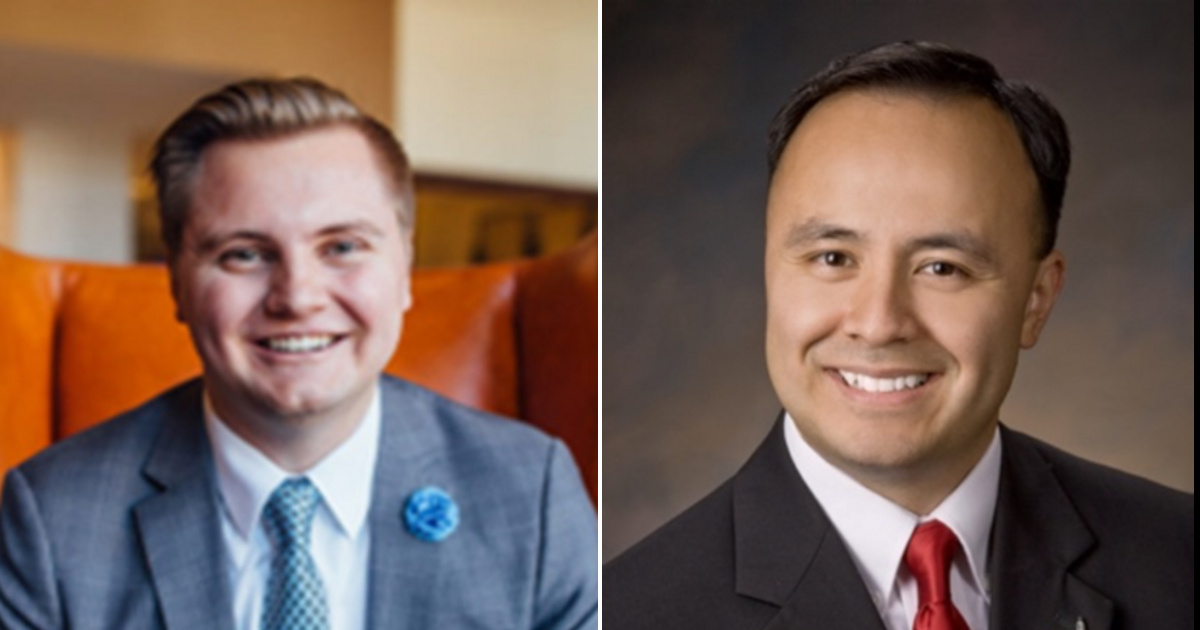
Lincoln voters will decide five City Charter amendments November 3 that could change when city elections are held, how long City Council members can serve and who can vote in municipal elections. City Council Chair Brodey Weber and Good Government Lincoln spokesman Tony Fulton offer different views on the proposals, particularly how the city would move to even-year elections.
Good Government Lincoln brought forward Questions 2, 4 and 6. The city placed competing alternatives on the ballot as Questions 3 and 5.
Moving City Elections
Both election-timing proposals would align Lincoln elections with statewide elections, but they use different transition schedules. Question 2 would hold mayoral and district council elections in 2027 and again in 2028, while at-large council members elected in 2025 would remain in office until successors are elected in 2030.
Question 3, the city’s alternative, would hold mayoral and district council elections in 2027 and 2030, with at-large elections in 2029 and 2032. Under either proposal, transition terms would count as full four-year terms for term-limit purposes.
Fulton says moving elections sooner would bring the benefits of lower costs and higher participation sooner. He also favors holding mayoral elections during presidential election years. “The reason why we did this again is to save some money and to increase voter turnout,” Fulton told KLIN News. “And so it seems to me that if we want those things, then we should want them right away.”
Weber argues the petition proposal would create uneven transition terms, shortening some while extending others. At an October 14 news conference, he also said keeping local elections separate from national contests has value. “I have always been supportive of having local elections be focused on local issues,” Weber said. “I think it’s important that local issues are being addressed in local elections versus who you’re voting for for president.”
Weber said voters who favor moving elections should have a straightforward proposal that makes the consequences clear. He said he plans to support the city’s alternative.
Council Term Limits
Question 4 would limit council members to two consecutive four-year terms. Question 5, the city’s alternative, would allow three consecutive four-year terms.
Fulton, a former state senator and state tax commissioner, said his own views on term limits have evolved. He pointed to his experience leaving the Legislature under its term limits. “I just recognize it over and over and over. This gets in front of the people and they support term limits,” Fulton said. “And that ultimately is why I bowed out. I was term limited and I didn’t fight it.”
Weber said he plans to vote for Question 5, the three-term alternative, along with Question 3. He urged voters to examine the details of each proposal before deciding. “What I care about is making sure voters are fully informed of the consequences of their decision,” Weber said.
Voting Outside City Limits
Question 6 would extend voting eligibility in city elections to residents of Lincoln’s three-mile extraterritorial zoning jurisdiction outside city limits. The proposal has no competing city alternative.
Weber opposes the expansion, arguing it would give people outside Lincoln a vote in city government even though they do not pay city property or wheel taxes. Fulton said the proposal has generated the most discussion among the people he has heard from, with opinions divided. “But that’s why we vote,” Fulton said. “I think that more than anything, they’re glad to be able to have a voice on these things.”
Weber also invited Fulton to a public forum or debate on the amendments. In an October 15 interview with KLIN News, Fulton said he had not given the invitation much thought and cited time constraints. “That’s ultimately what my goal was, was to get this on the ballot for people,” Fulton said.
Voters can review the questions in the Lancaster County sample ballot and find their polling place through Nebraska Voter Check. Polls are open from 8 a.m. to 8 p.m. November 3.