



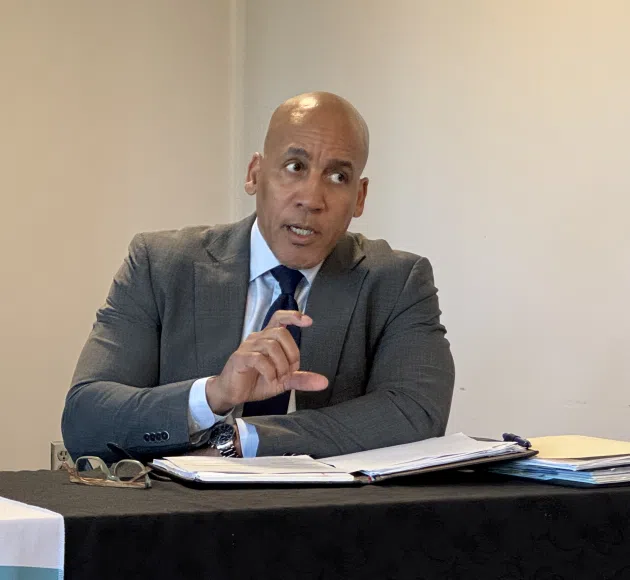
During a Friday morning news conference Nebraska Department of Correctional Services Director Rob Jeffreys highlighted the expanding network of reentry initiatives supporting Nebraskans as they transition back into their communities.
Jeffreys, joined by state leaders, outlined recent progress in strengthening rehabilitation opportunities, expanding collaborative partnerships and stabilizing the state’s correctional system. “Rehabilitation and reentry is a shared mission for our entire state, not just NDCS,” Jeffreys says.
He shared updated population data showing continued stabilization across the system. Today, the incarcerated population stands at 5,649. This is slightly below where it was in 2020 and significantly lower than projections made in the 2021 Crime and Justice Institute report. That report estimated the population would be around 6,200 at this time and 7,300 by 2030.
Additional bed capacity has come online through new units at the Reception and Treatment Center, including specialized housing for individuals with mental health needs and, soon, geriatric care. General population housing continues to maintain approximately 10 percent vacancy, with 600 beds available system-wide.
Jeffreys highlighted the TRANSFORM Nebraska Network as a driving force behind the state’s reentry progress. The Network brings together state agencies, higher learning institutions and community partners to identify barriers, align efforts and coordinate support for individuals and families navigating retry in Nebraska.
State partners underscored the importance of education and employment in long‑term reentry success. The Nebraska Department of Labor pointed to efforts to connect individuals with job opportunities earlier in their transition, expand access to American Job Centers, and strengthen partnerships with employers seeking skilled workers.
The 5-Key Model for Reentry and Well-being Development, a core component of NDCS’s rehabilitation and reentry approach, has seen a dramatic increase in engagement. Over the past six months, participation in these programs has tripled, driven in large part by the use of trained peer facilitators.
More than 200 incarcerated men and women have been trained, helping create a supportive environment focused on whole‑person and whole‑family success.
(Photos: KLIN’s Tom Stanton)