


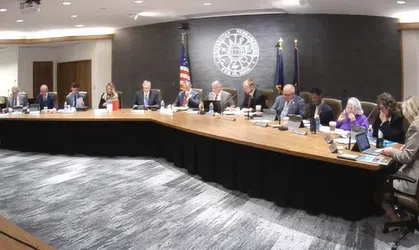
The University of Nebraska Board of Regents on Thursday unanimously approved an $800 million transaction that would make the University of Nebraska the sole governing member of Nebraska Medicine, ending nearly 30 years of dual-member governance with Clarkson Regional Health Services.
Under the approved proposal, the University would pay $500 million to acquire Clarkson Regional Health Services’ membership stake in Nebraska Medicine, plus an additional $300 million for land and buildings associated with the health system. The transition would move Nebraska Medicine to single-member governance under the University of Nebraska while maintaining its nonprofit status and existing hospital board structure.
The Board heard about an hour of public comment before voting, including remarks both in support of and opposed to the deal. Regents also entered closed session during the meeting and added language citing “imminent litigation” to the agenda item prior to the final vote.
University leaders emphasized that the move would not alter day-to-day operations at Nebraska Medicine and would strengthen alignment between the health system and the academic mission of the University of Nebraska Medical Center (UNMC).
“This moment gives us the chance to stay true to the vision that has helped Nebraska Medicine grow into a world-class medical center,” University of Nebraska President Jeffrey P. Gold said. “It allows us to continue delivering the highest-quality care our patients expect, while strengthening our academic and clinical partnership.”
The dual-member governance structure has been in place since 1997, though the partnership between the institutions dates back to the 1950s.
Several UNMC faculty members spoke in favor of the proposal, describing it as an opportunity to further strengthen the relationship between UNMC and Nebraska Medicine. Dr. Dele Davies, interim chancellor of UNMC, said the two entities already function as a single integrated system.
“We share the same logo, we share the same mission statement, and we share the exact same values,” Davies said.
Others raised concerns about the timing and cost of the acquisition, particularly as the University of Nebraska faces budget pressures. Regents approved $8.74 million in cuts at the University of Nebraska–Lincoln in December, part of a broader effort to reduce an estimated $43 million systemwide shortfall.
Some current and former Nebraska Medicine officials have publicly opposed the proposal, characterizing it as a “state takeover.” The Regents had originally planned to vote on the proposal last week, but the meeting was rescheduled after 32 state senators signed a letter calling for a delay to allow more time for review.
Gold has described the transaction as “an amicable divorce” and said the change would allow Nebraska Medicine to expand and improve care. The transaction process will continue in the coming months.