



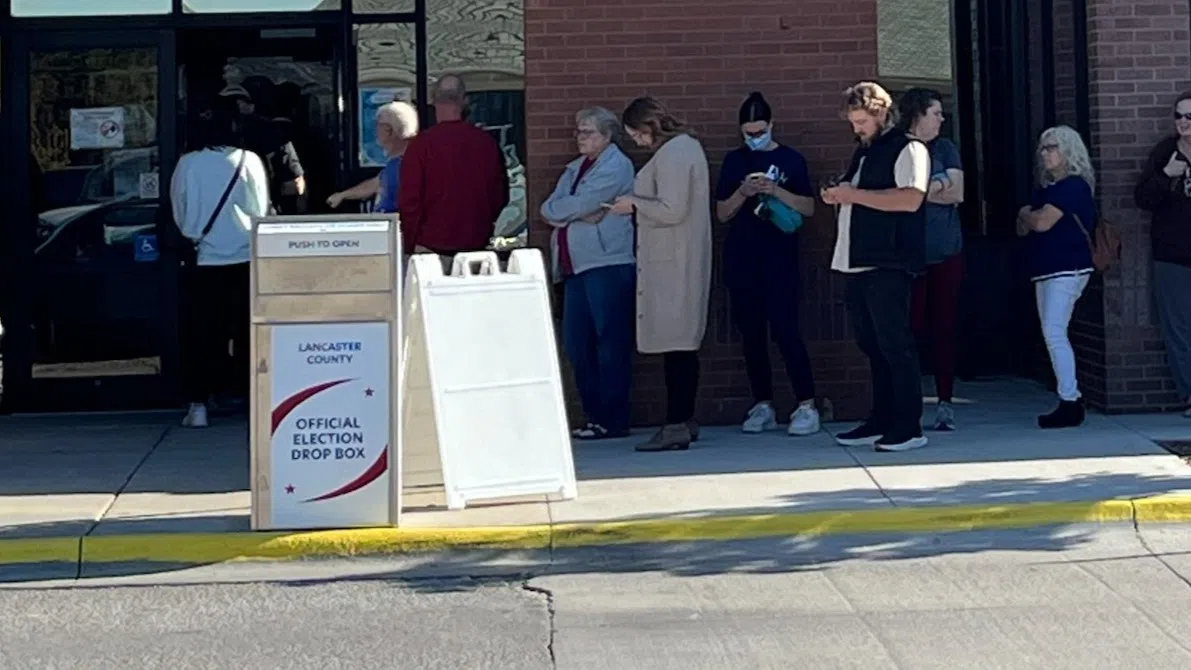
A new ballot initiative in Nebraska wants to mandate that all votes be counted by hand in every election, instead of using electronic vote counting machines. But a local election commissioner says the change would make election tabulations arduous, more costly, and prone to increased error.
The nonprofit group Advocates for All Nebraskans (AFAN) debuted the campaign Tuesday alongside a separate initiative that would change the state’s electoral college system to winner-take-all. The group, led by former Nebraska Republican Party Chairman Eric Underwood, is overseeing five ballot initiatives for 2026—the others pertaining to property tax reform and public teacher pay.
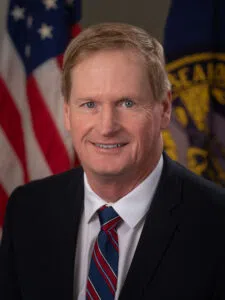
Kirk Penner, Elected to State Board of Education District 5 in 2022. (Photo courtesy of Nebraska State Board of Education)
State Board of Education Member and AFAN spokesman Kirk Penner told reporters the initiative is “fundamentally about trust and transparency.”
“Our initiative is simple,” he said. “By adopting hand-count ballots, Nebraska will ensure our elections are reliable, auditable, and beyond question.”
KLIN News spoke with Lancaster County Election Commissioner Todd Wiltgen on Wednesday to get his reaction. The former republican county commissioner said, due to the fact the initiative could go before voters, he would not “weigh in” on the merits with official support or opposition.
But he did offer “to educate about it,” citing several concerns about cost to taxpayers, less than timely tabulations, and the potential for less accurate counts.
“Currently as is, our elections are safe and secure,” said Wiltgen. “If the question is: Will hand-counting result in more accurate results? The answer would be no. Would it be less expensive? No, it would not. It’d be more expensive. And result would take longer to be released.”
Before detailing these challenges, Wiltgen outlined the basics of Nebraska’s election process. All 93 counties in the state administer elections the same way, he said. All ballots have always been cast on paper and are currently tabulated by electronic equipment. Wiltgen says those machines are tested before every election “extensively.”
“They’re called logic and accuracy tests. There are three independent tests done by three independent individuals: the commissioner, a deputy of a different party than the commissioner, and an independent person,” he described. “In statewide elections, all there’s also a mandatory audit done after the election where there’s a random number of precincts and a random number of races that are hand counted to verify that the machines read the ballots accurately.”
So if Nebraska were to upend the current system and switch to hand-counting? Wiltgen has three main concerns.
Accuracy
“Every study that’s ever been done on hand counting demonstrates that the results are less accurate,” Wiltgen said.
A 2018 study examined statewide recounts for two elections in Wisconsin—a 2011 Supreme Court race and the 2016 presidential race. It found that election night hand counting produced error rates of approximately 1.4 to 1.8 times that of optical machine scanning.
Wiltgen said he could only speak to the accuracy of machines in his office. But since Gov. Jim Pillen appointed him to the role in 2023, he’s overseen two elections subject to mandatory manual audits. He said those audits revealed “zero deviation” between the audit results and the machine results.
For weight, he added that even a deviation of 0.5% could swing an election.
“For example, last November, we had one election in a village that resulted in a tie. So any deviation could have an impact, especially in smaller/lower-turnout races,” he said.

Todd Wiltgen
(Courtesy of Lincoln Chamber of Commerce)
Timeliness
“Right now, most election results are released that night. If we had to wait to hand count every ballot, it would take days,” the commissioner said. “There would be no way for the ballots to be counted as quickly as the machines.”
In November 2024, over 161,000 voters in Lancaster County cast a ballot. About 94,000 voted on election day, about 62,000 voted early, and a little more than 3,000 cast provisional ballots.
“It would take 1,100 people over a week to count those ballots in a presidential election, because they’re counted by precinct,” Wiltgen said. “Counting ballot by hand is very labor intensive. It’s repetitive. That’s what makes it prone to errors. When you have repetitive, tedious work, an environment for errors is made.”
To conscript a small army of ballot counters, Wiltgen says election offices would likely have to start drafting workers—similar to jury duty.
“We’re fortunate to have a lot of dedicated volunteers election workers here in Lancaster County. We haven’t had to implement any type of conscription or draft. But counties like Douglas and Sarpy have had to conscript workers for past Election Days,” he added.
Cost
Lastly, Wiltgen said the sheer cost of funding such an operation would be steep.
“Right now, the cost to count ballots is very minimal. If we go to hand counting, you’re going to have to pay people to do that work. If we had done hand-counts for 2024’s presidential election, it would have cost Lancaster County taxpayers over $530,000—and that’s just for labor,” he said. “That number doesn’t include the costs associated with security or for a venue large enough to accommodate 1,100 people.”
“That cost would be specifically borne by the property taxpayers, which would ultimately become a unfunded mandate,” he continued.
This tracks with a 2023 study by Arizona’s Mohave County Elections Department, which found that hand-counting the 2024 general election results would require 245 people working 19 eight-hour days, and cost about $521,000. Accounting for other expenses, the study estimated hand-counts for both the 2024 primary and general elections would cost the county $1.1 million.
Skepticism
While unveiling the initiative, Penner said it “simply codifies the most secure and publicly verifiable method of counting votes. By prioritizing the manual counting of every ballot, we are setting a strong precedent that can be a trendsetter for other states looking to restore public confidence in their election system.”
But according to Wiltgen, Nebraska election are “the gold standard.”
“We need to remember that all 50 states have the individual responsibility of administering their own elections. I think sometimes people hear how voters are voting in other states, but in Nebraska, we have a very simple system. All our ballots are on paper. Yes, in some states, there are electronic machines which votes are cast on. We don’t have those in Nebraska. We’ve always voted on paper. We probably always will,” Wiltgen said.
“People need to remember: It doesn’t matter if you’re in rural Nebraska or urban Nebraska, your votes are counted the same way. All the elections are administered identically,” he continued. “We already have a system in place. The logic and accuracy tests, that process is open to public inspection. The actual counting of the ballots is open to public inspection. Political parties have the ability to appoint people to watch. There’s never been a situation that warrants hand counting.”
Wiltgen finished saying to any voter concerned with election integrity, “They’re welcome to contact me. I’d be more than happy to walk through the process.”
The ballot initiative would amend the state’s constitution, and thus will require more than 125,000 valid signatures from voters to appear on the November 2026 ballot.
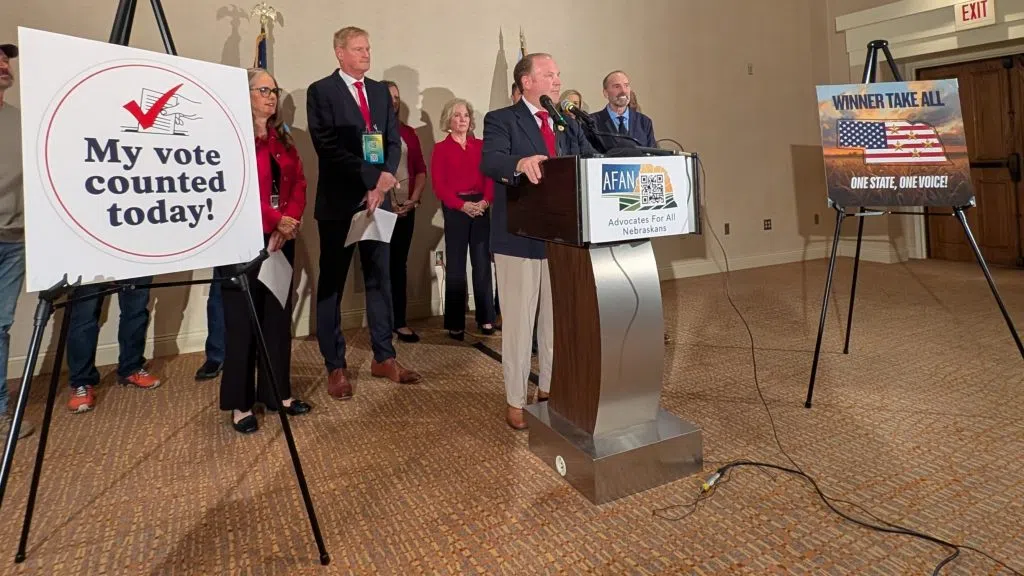
Eric Underwood, former NEGOP Chairman and Registered agent for the ‘Advocates for All Nebraskans’ group speaks on their latest ballot initiatives with reporters on Tuesday, October 14, 2025, in the “Arbor Room” under the Cornhusker Hotel in downtown Lincoln. (Chase Porter, KLIN News)