



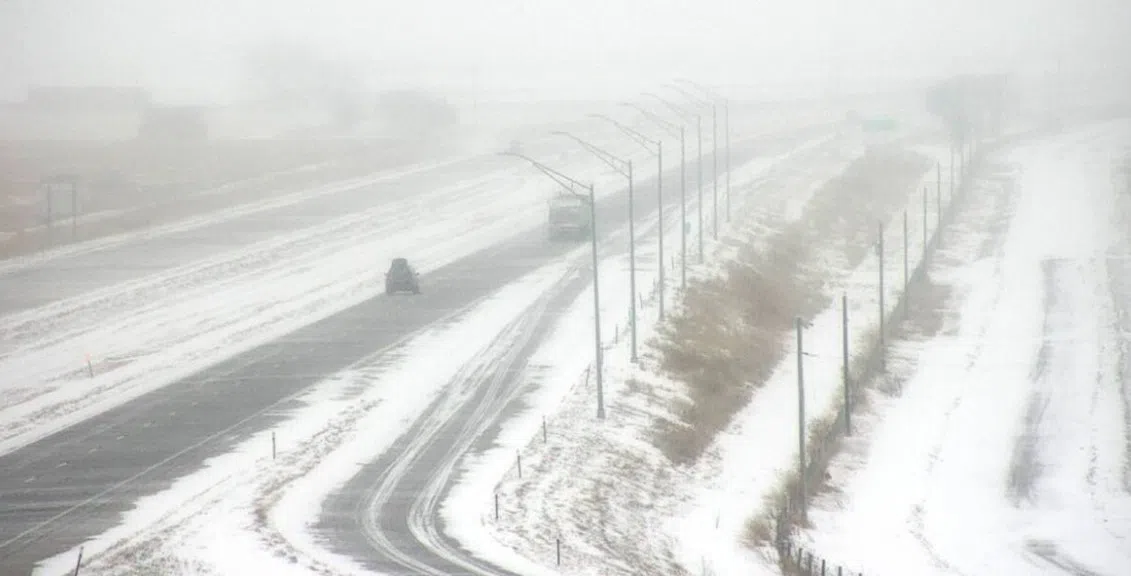
Winter storms have walloped Nebraska over the last week.
With many, many inches of snowfall blanketing the state, it begs the question: How does this affect drought conditions still persisting in Nebraska?
KLIN News caught up with Retired UNL Climatologist and avid drought tracker Dr. Ken Dewey.
“I know everybody’s excited about all the moisture because we needed it. I keep hearing people say, ‘It’s just going to soak into the ground.’ No, it’s not,” said Dr. Dewey.
Dr. Dewey explained further, recent snowfall in Nebraska will ultimately yield about 1 inch of liquid water.

January 16th, 2024 Drought Map. (National Integrated Drought Information System)
Nebraska ended 2023 with a moisture deficit around 6.5 inches below normal. According to Dr. Dewey that’s pretty severe. With the water sitting on the ground, we’ll ultimately find ourselves with a deficit of ~6 inches below normal compared to January 2023.
“I’ve heard people say, ‘This is wonderful. We needed the moisture. I can hardly wait for that snow to melt. All that water can just soak right into the ground.’ But we have a frozen ground. It’s going to act as a surface,” said Dr. Dewey. “As it melts, it’ll run down the driveway, across the sidewalk, into the street and into the rivers. It’ll be long gone ever before spring comes.”
This run-off may be beneficial to farm fields, as some water will get trapped in low areas and ponds, but according to Dr. Dewey, “All that moisture will likely just run off, and will not really contribute much to the end of our drought. Even if it did, we would still be at least five inches below normal for precipitation compared to a year ago.”
Dr. Dewey stopped short of forecasting nihilism, “It’s an improvement. It’s nice to see these amounts of water, especially compared to our dry winter last year. But this is not a drought breaker.”
In fact, Dr. Dewey infused a some optimism into his diagnosis, regarding the winter weather. “During this extreme cold, we’ve reached nearly -20°. If that cold penetrates deep into the ground, it can get to water lines and cause problems and get to the roots of plants and kill plants. The snowpack acted as a blanket protecting the deep cold from penetrating down into the ground throughout the Lincoln area,” said Dr. Dewey.
KLIN News will continue to monitor drought conditions across Southeast Nebraska and report on significant developments.