

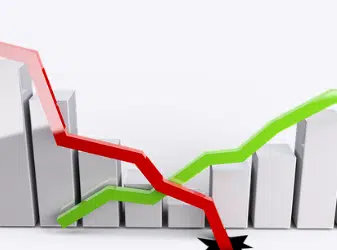
The University of Nebraska-Lincoln has released a three-year forecast, and it reveals the state’s economy is expected to shrink in 2023 before returning to growth in 2024 and 2025. The study was conducted by UNL’s Bureau of Business Research and the Nebraska Business Forecast Council.
Dr. Eric Thompson is the Director of the Bureau of Research and K.H. Nelson Professor and Chair of Economics at Nebraska, and he told KLIN News, “The Federal Reserve, because of high inflation, has had to raise interest rates, and will likely need to raise them further. Such a sharp increase in interest rates is going to slow down the economy significantly, nationally and here in Nebraska. Such a large slowdown will simply cause the economy to stagnate.
The most likely thing is it will cause a reduction in the economy – a recession.”
Dr. Thompson added that the expectation of the recession’s length is moderate – two to three quarters. “I don’t know that it will be a severe recession, like we’ve seen in recent years. I don’t expect that. But I don’t know that it will be a mild recession, either,” said Dr. Thompson.
When comparing 2023 to 2022, Dr. Thompson says employment in Nebraska is expected to decline by about two-tenths of a percent, but there could be a sharper decline when the recession hits. Construction, which normally adds jobs in the state, is expected to lose jobs. Services, including businesses that provide services to other businesses, can also expect job losses. Nebraska’s manufacturing sector, however, is expected to do relatively well.
Dr. Thompson reiterated that recovery is expected to begin in 2024 and continue into 2025. “2025 will be sort of a return to normal; a return-to-trend-year, with 2024 sort of transitioning from recession to normal growth.”
The complete report is available here