



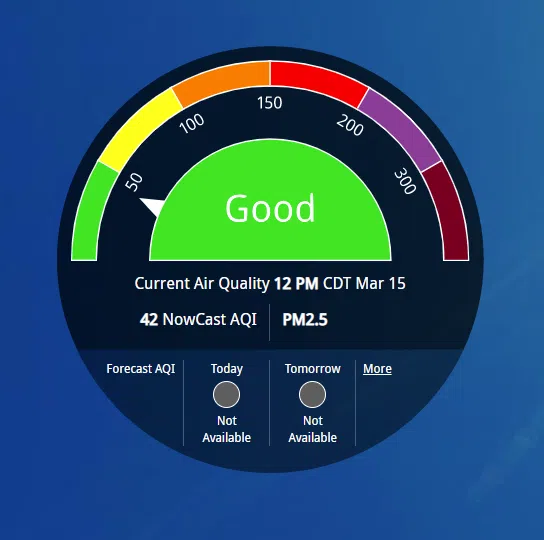
Spring burning season is getting underway. The Lincoln – Lancaster County Health Department is encouraging residents to monitor the Air Quality Index to determine if levels of smoke in the air are unhealthy.
Over the next six to eight weeks, smoke from controlled burning in the Flint Hills of Kansas and Oklahoma may cause elevated levels of smoke in Lincoln and Lancaster County. Drought conditions throughout central and western U.S. have also increased the risk of wildfires.
Smoke from controlled burning and wildfires can cause serious health issues, especially for children, older adults, and those with asthma, lung disease, heart disease, or other respiratory conditions. Those at risk should check the Air Quality Index before doing strenuous activities outdoors. People should also take breaks and watch for symptoms such as coughing, shortness of breath, difficulty breathing, or chest pain.
The Lincoln – Lancaster County Health Department monitors air quality 24 hours a day and the update the Air Quality Index hourly at airnow.gov. The Environmental Protection Agency also provides the AirNow and SmokeSense smart phone app’s to help people stay informed.
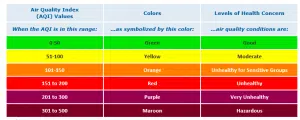
The air quality levels are color-coded on the Air Quality Index chart as follows:
Air Quality Index values below 100 (green or yellow) are not expected to cause health problems for the vast majority of people.
Air Quality Index values between 101 and 150 (orange) indicate that air quality is unhealthy for sensitive individuals. People with asthma should follow their asthma action plans and have quick relief medicine readily available. Children, older adults and those with heart or lung disease should reduce prolonged or heavy exertion during outdoor activities.
Air Quality Index values higher than 150 (red, purple, and maroon) indicate that air quality is unhealthy for all people. Outdoor activities should be moved indoors or rescheduled to a time when air quality will be better. Children, older adults, and people with asthma or heart or lung disease should avoid prolonged or heavy exertion during outdoor activities. All others should reduce prolonged or heavy exertion during outdoor activities and take more breaks during outdoor activities.
When conditions are unhealthy, those at risk can further protect themselves by staying indoors, keep windows and doors closed, use a HEPA filter, and use the recirculate setting when using a vehicle air conditioner. Those who are having difficulty breathing, are coughing, experience unusual fatigue, heart palpitations, tightness in the chest, or angina should contact a health care provider.